Table of Contents
Cyber Fraud in India: What Every Bank Account Holder Must Know
Cyber fraud in India is rising at an alarming pace. Every day, thousands of people receive calls, messages, emails, or WhatsApp texts from fraudsters pretending to be bank officials, RBI representatives, police officers, KYC verification agents, or government authorities.
The tactics are carefully designed to create panic, urgency, fear, or confusion.
“Your account will be blocked.”
“Your KYC has expired.”
“An FIR has been registered against your number.”
“Your bank account is linked to suspicious activity.”
In moments of panic, victims unknowingly share OTPs, UPI PINs, banking passwords, CVV numbers, or click malicious links — allowing fraudsters to drain bank accounts within minutes.
The reality is harsh:
Most victims do not lose money because they are careless.
They lose money because cyber criminals are highly sophisticated in manipulating trust and urgency.
The good news is that immediate and informed action can significantly improve the chances of recovery.
In this guide, we explain the most important steps to take after a cyber fraud or unauthorized bank transaction in India.
The Most Important Rule: Never Share Sensitive Banking Details
No legitimate bank, RBI official, police authority, or government agency will ever ask you for:
- OTPs
- CVV numbers
- UPI PINs
- Net banking passwords
- Debit/Credit card PINs
- Remote access to your mobile phone or device
If anyone asks for these details over a call, message, email, or WhatsApp chat, treat it as a fraud attempt immediately.
Fraudsters often impersonate:
- Bank customer support
- RBI officers
- Telecom operators
- Cyber Crime officials
- Income Tax officers
- Police authorities
- Loan or KYC verification executives
Always verify independently using official bank websites, apps, or customer care numbers.
What To Do Immediately After a Cyber Fraud or Unauthorized Bank Transaction
Why Immediate Action Matters
The first 30 minutes to 24 hours are extremely critical after a cyber fraud.
Under RBI guidelines, prompt reporting may help reduce customer liability and improve the chances of transaction reversal or fund recovery.
Delays often allow fraudsters to transfer, layer, or withdraw the money rapidly through multiple accounts.
Here are the immediate steps every victim should take.
Step 1: Contact Your Bank Immediately
Time Window: First 0–5 Minutes
Call your bank’s official fraud helpline immediately.
Use only:
- Official bank website
- Mobile banking application
- Passbook or debit card details
Never trust phone numbers shared by callers, SMS messages, or WhatsApp links.
Request the Bank To:
- Block your account or card immediately
- Freeze the beneficiary account
- Stop or reverse the fraudulent transaction
- Disable internet banking or UPI temporarily if required
- Share a complaint or ticket reference number
Important Legal Point
Clearly inform the bank that:
You are filing a cyber crime complaint and expect full cooperation under RBI guidelines and banking regulations.
This creates a formal record and increases accountability.
Always request written or email acknowledgment from the bank.
Step 2: Submit a Written Complaint to the Bank
Why This Step Is Important
Many victims only make phone calls and do not submit a formal written complaint.
This is a major mistake.
A written complaint helps establish:
- Official documentation of the fraud
- RBI liability protection
- Stronger transaction reversal claims
- Evidence for future legal proceedings
- Support for Ombudsman or Consumer Court complaints
Documents You Should Attach
- Bank statement or SMS alerts
- Screenshots of fraudulent messages or transactions
- Call logs or WhatsApp chats
- Identity proof
- Transaction IDs or UTR numbers
Important Tip
Always submit the complaint in duplicate and obtain a stamped acknowledgment copy from the bank.
This acknowledgment may become extremely important later.
Step 3: Report the Fraud on 1930 and Cyber Crime Portal
National Cyber Crime Helpline: 1930
Immediately call the national cyber fraud helpline:
1930
This is one of the fastest mechanisms available for reporting financial cyber fraud in India.
File Complaint on Cyber Crime Portal
Website:
https://www.cybercrime.gov.in
Select the category:
“Financial Fraud”
Upload:
- Transaction details
- Screenshots
- Bank complaint copy
- Fraud call/message evidence
Save the complaint acknowledgment and complaint ID carefully.
Why Early Reporting Matters
The faster the complaint is filed, the higher the chances of:
- Freezing beneficiary accounts
- Tracking transaction flow
- Preventing withdrawal of funds
- Supporting recovery efforts
Time is one of the biggest deciding factors in cyber fraud recovery.
Step 4: File a Police Complaint or Cyber Cell Complaint
Visit:
- Local Police Station
- Cyber Crime Police Station
- Cyber Crime Cell
Carry:
- Bank complaint copy
- Cyber portal complaint acknowledgment
- Transaction details
- Screenshots and call logs
- Identity proof
Why Police Documentation Is Important
A properly documented complaint becomes critical during:
- Fund recovery efforts
- Banking disputes
- Insurance claims
- Consumer Court proceedings
- Criminal investigation
- Legal escalation
If necessary, you may also seek legal assistance for drafting and representation.
Common Types of Cyber Fraud in India
Cyber fraud techniques continue to evolve rapidly.
Some of the most common frauds include:
1. Fake KYC Update Calls
Fraudsters claim your bank account or SIM card will be blocked unless KYC is updated immediately.
2. OTP & UPI Fraud
Victims are tricked into sharing OTPs or approving fraudulent UPI collect requests.
3. Remote Access App Scams
Fraudsters ask victims to install apps like AnyDesk or screen-sharing tools, gaining access to banking applications.
4. Fake Customer Care Numbers
Scammers publish fake customer care numbers online to intercept distressed customers.
5. Investment & Trading Frauds
Victims are lured through fake investment platforms, guaranteed returns, or cryptocurrency schemes.
6. Loan App Frauds
Illegal loan apps access personal contacts and use harassment or blackmail tactics.
7. QR Code Frauds
Victims are tricked into scanning malicious QR codes that initiate payments instead of receiving money.
Cyber Safety Tips Everyone Should Follow
To reduce cyber fraud risks:
- Never share OTPs or UPI PINs
- Avoid clicking suspicious links
- Use strong and unique passwords
- Enable two-factor authentication
- Verify all requests independently
- Avoid downloading unknown applications
- Regularly monitor bank statements
- Use official banking apps only
- Keep devices and apps updated
Most importantly:
Pause before acting under pressure.
Fraudsters rely on emotional urgency.
Verification is your strongest defense.
Legal Rights of Victims in Unauthorized Bank Transactions
Victims of cyber fraud may have rights under:
- RBI regulations and circulars
- Consumer protection laws
- Information Technology Act, 2000
- Bharatiya Nyaya Sanhita (BNS)
Depending on the facts of the case, victims may seek:
- Transaction reversal
- Compensation
- Banking accountability
- Ombudsman remedies
- Consumer dispute remedies
- Criminal investigation
Timely reporting and proper documentation significantly strengthen legal standing.
Final Thoughts
Cyber fraud is no longer just a technology issue.
It is now a major financial, legal, and public awareness challenge.
Fraudsters succeed when panic becomes faster than verification.
The most important thing every individual should remember:
- Pause
- Verify independently
- Never share confidential banking credentials
- Report immediately if fraud occurs
Awareness and quick action can make the difference between recovery and permanent financial loss.
Need Guidance on Cyber Fraud or Legal Documentation?
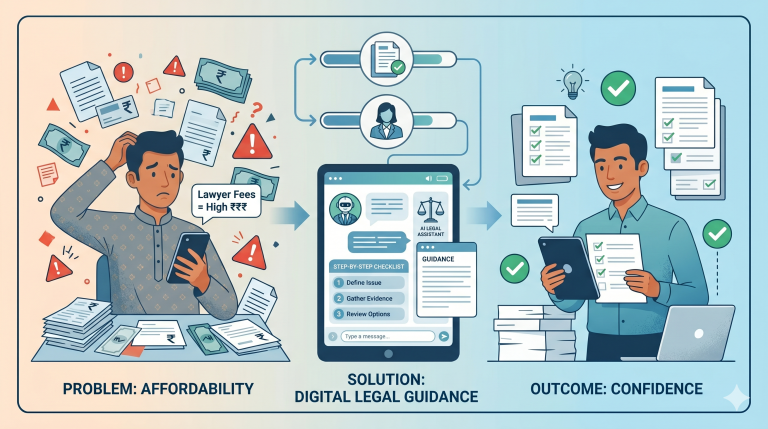
At SimplerToday.ai, we focus on making legal awareness and structured legal guidance more accessible for individuals facing urgent situations, including cyber fraud and unauthorized banking transactions.
If you or someone you know faces such an issue, ensure that proper documentation, timely reporting, and structured action are taken immediately.
Frequently Asked Questions (FAQs)
Can money be recovered after cyber fraud?
Yes, recovery may be possible in some cases, especially if the fraud is reported quickly to the bank, cyber helpline (1930), and cybercrime.gov.in.
How quickly should cyber fraud be reported?
Ideally within minutes. The earlier the reporting, the higher the chances of freezing the transaction trail.
Should I file both bank and police complaints?
Yes. Both are important. Bank complaints help with transaction reversal and liability issues, while police complaints support criminal investigation and legal documentation.
What should I do if the bank is not cooperating?
Victims may escalate matters through the RBI Ombudsman, Consumer Court, or appropriate legal proceedings depending on the situation.
Can banks ask for OTPs or UPI PINs?
No. Banks and authorities never ask for confidential credentials like OTPs, CVVs, passwords, or UPI PINs.