Every employee expects to be paid on time, treated fairly, and work in a safe environment. Unfortunately, workplace disputes are becoming increasingly common across India. Delayed salaries, sudden terminations, unpaid final settlements, and unclear employment contracts leave many employees confused about their rights.
The biggest challenge is that most people only start searching for information after a problem has already occurred.
Understanding your employment rights in India before issues arise can help you make informed decisions, avoid common mistakes, and know when professional guidance may be necessary.
This guide answers some of the most frequently asked employment law questions in simple language.
Table of Contents
Why Understanding Employment Rights in India Matters
Employment relationships are governed by employment contracts, company policies, and applicable labour laws. Whether you work for a startup, multinational company, or small business, understanding your rights helps you protect your salary, career, and professional reputation.
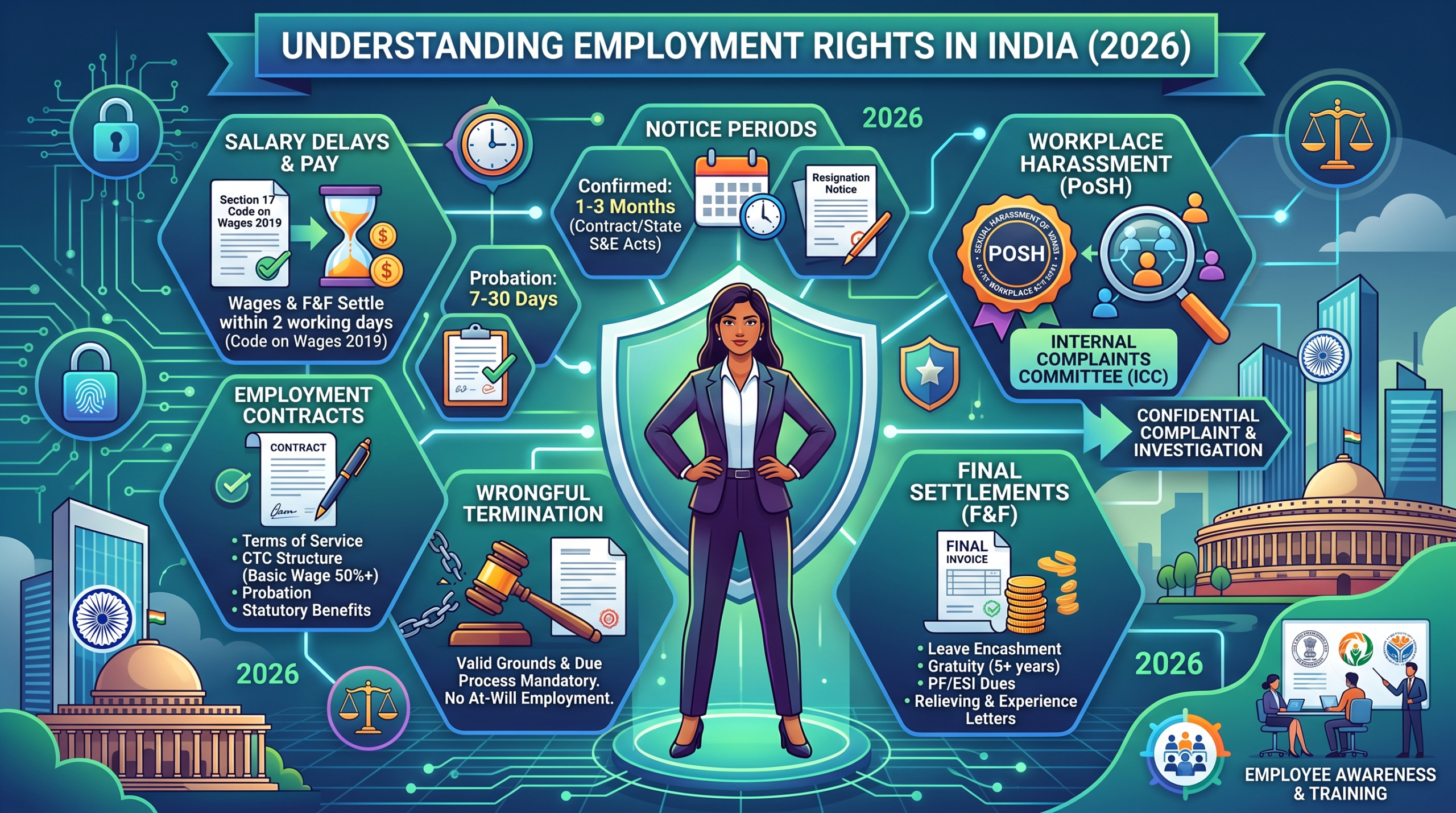
Most workplace disputes involve one or more of the following:
- Delayed salary payments
- Sudden termination
- Final settlement disputes
- Employment contracts
- Workplace harassment
- Experience or relieving letters
- Employment bonds
Being aware of your rights allows you to respond appropriately instead of reacting emotionally.
1. Can an Employer Delay or Withhold Your Salary?
Salary delays are one of the most common employment disputes in India.
While occasional administrative delays may happen, repeated or unexplained delays should not be ignored.
If your salary is consistently delayed, maintain records of:
- Employment contract
- Salary slips
- Bank statements
- Email communication
- HR correspondence
Having proper documentation becomes important if the issue needs to be escalated later.
2. Can You Be Terminated Without Notice?
Many employees believe an employer can terminate employment at any time.
In reality, the answer depends on several factors, including:
- Your employment contract
- Company policies
- Applicable labour laws
- The circumstances of termination
Every situation is different, and the legal position depends on the specific facts of the case.
3. What Should You Do if Your Final Settlement Is Delayed?
Your Full and Final Settlement usually includes several components such as unpaid salary, leave encashment where applicable, reimbursements, bonuses, and other dues.
If your settlement is delayed, keep copies of:
- Resignation email
- Acceptance of resignation
- Salary records
- HR communication
- Exit documents
Maintaining complete records often makes resolving disputes easier.
4. What Should You Check Before Signing an Employment Contract?
Many people sign employment contracts without reading the important clauses.
Before accepting an offer, review:
- Salary structure
- Notice period
- Probation period
- Working hours
- Leave policy
- Confidentiality obligations
- Non-compete or non-solicitation clauses
- Termination conditions
- Incentive or bonus structure
- Dispute resolution clause
Understanding these provisions before joining can prevent misunderstandings later.
5. Can an Employer Keep Your Original Documents?
Some employers ask employees to submit original educational certificates or identity documents.
Before handing over original documents, understand why they are being requested and whether certified copies would be sufficient.
Always keep copies of any documents you submit and obtain written acknowledgement if originals are collected.
6. Is an Employment Bond Always Legally Enforceable?
Employment bonds are common in industries where employers invest significantly in employee training.
However, not every bond is automatically enforceable.
The validity of an employment bond depends on factors such as its terms, duration, reasonableness, and the specific facts of the employment relationship.
If you are unsure about the implications of signing a bond, seek clarity before accepting the offer.
7. Can an Employer Refuse to Give an Experience Letter?
An experience letter is often required when applying for a new job.
If your employer refuses to issue one, preserve records of:
- Appointment letter
- Salary slips
- Email communication
- Resignation acceptance
- Relieving documents
These records may help establish your employment history.
8. What Happens If You Resign Without Serving Your Notice Period?
Many employment contracts require employees to serve a notice period before leaving.
Depending on the agreement, this may result in:
- Notice pay recovery
- Salary adjustments
- Negotiated notice buyout
Before making a decision, review your employment contract carefully.
9. Can an Employer Reject Your Resignation?
Generally, resignation initiates the process of ending employment, but the exact procedure depends on your contract, company policies, and applicable law.
Employees should ensure that resignations are submitted in writing and retain copies of all correspondence.
10. What Should You Do if You Face Workplace Harassment?
Every employee deserves a respectful workplace.
If you experience harassment, discrimination, or inappropriate behaviour:
- Record important incidents.
- Save emails and messages.
- Preserve supporting evidence.
- Follow your organisation’s internal complaint process.
- Understand the remedies available under applicable laws.
Early documentation is often more effective than trying to reconstruct events later.
11. Can Your Employer Monitor Your Work Laptop or Official Email?
Many organisations monitor company-owned devices and official communication channels to protect business interests and maintain security.
Employees should understand their company’s IT and privacy policies before using office devices for personal communication.
12. Can You Work for Another Company While Employed?
With remote work becoming more common, many employees wonder whether they can take up additional work.
The answer depends on:
- Your employment agreement
- Company policy
- Nature of the second engagement
- Potential conflict of interest
Always review your employment contract before accepting additional work.
13. What Employment Documents Should Every Employee Keep?
Every employee should safely preserve important employment records throughout their career.
These include:
- Offer letter
- Appointment letter
- Employment contract
- Salary slips
- Form 16
- Bank statements
- Performance reviews
- Promotion letters
- Resignation acceptance
- Relieving letter
- Experience certificate
Good documentation often becomes your strongest protection during disputes.
14. When Should You Seek Professional Guidance?
Many workplace issues can be resolved through communication.
However, consider seeking guidance if your matter involves:
- Unpaid salary
- Wrongful termination
- Workplace harassment
- Employment bond disputes
- Delayed final settlement
- Contract interpretation
Early guidance often helps prevent unnecessary escalation.
15. Frequently Asked Questions About Employment Rights in India
Can an employer delay salary every month?
Repeated salary delays should not be treated as normal. Employees should maintain records and communicate with their employer to understand the reasons.
Can I resign during my probation period?
Many employment contracts allow resignation during probation, although the applicable notice period may differ.
Is an employment bond always valid?
Not necessarily. The enforceability of an employment bond depends on its terms and the facts of each case.
How long does a company take to complete the final settlement?
The timeline varies depending on company policy, employment terms, and applicable legal requirements.
Can my employer refuse to provide an experience letter?
The circumstances vary, but employees should preserve employment records that demonstrate their service history.
Common Mistakes Employees Make
Many workplace disputes become more complicated because employees make avoidable mistakes.
Some of the most common include:
- Signing employment contracts without reading them.
- Relying only on verbal promises.
- Not saving salary slips or employment records.
- Resigning without understanding notice obligations.
- Waiting too long before raising concerns.
Small mistakes today can create larger problems later.
Official Resources
For reliable information on employment laws and employee benefits, you can refer to:
- Ministry of Labour and Employment
https://labour.gov.in - Employees’ Provident Fund Organisation (EPFO)
https://www.epfindia.gov.in - eShram Portal
https://eshram.gov.in - Employees’ State Insurance Corporation (ESIC)
https://www.esic.gov.in
Conclusion
Understanding your employment rights in India is one of the best ways to protect yourself from unnecessary workplace disputes.
Whether you are joining your first job, switching employers, or facing an employment-related issue, knowing your rights helps you make informed decisions with confidence.
Most employment disputes do not arise because people intentionally break the rules. They happen because employees and employers misunderstand their obligations or fail to maintain proper documentation.
Staying informed, preserving important records, and acting early can make resolving workplace issues far simpler than waiting until they become serious.