Online shopping has become a part of everyday life. Whether it’s electronics, clothing, furniture, medicines, or groceries, millions of Indians place orders online every day through marketplaces, brand websites, and social media stores.
While most transactions are genuine, online shopping fraud in India has also increased significantly. Fake websites, fraudulent sellers, counterfeit products, and orders that never arrive have left many consumers frustrated and unsure about what to do next.
Sometimes the payment is successful, but the seller disappears. In other cases, the order is marked as delivered even though nothing was received. Some buyers receive completely different products, while others struggle for weeks to get a refund.
If you’ve paid for a product that hasn’t arrived, don’t panic. Acting quickly and keeping proper records can improve your chances of resolving the issue.
This guide explains what online shopping fraud in India looks like, what steps you should take immediately, and where you can seek help.
Table of Contents
What Is Online Shopping Fraud?
Online shopping fraud occurs when a buyer is deceived during an online purchase, resulting in financial loss, non-delivery of goods, fake products, or misleading transactions.
Some of the most common examples include:
- Paying for an order that is never delivered.
- Receiving counterfeit or damaged products.
- Fake shopping websites that disappear after receiving payment.
- Sellers refusing refunds despite valid claims.
- Social media stores taking payment and blocking customers.
- Orders marked as delivered when nothing was received.
- Fake customer support numbers asking for additional payments.
Knowing the type of fraud helps you choose the right course of action.
Common Signs of Online Shopping Fraud
Many fraudulent websites share similar warning signs.
Be cautious if you notice:
- Prices that seem too good to be true.
- No customer care number or business address.
- Only prepaid payment options.
- Poor website design with spelling errors.
- No return or refund policy.
- Recently created websites with no customer reviews.
- Sellers asking you to continue the transaction outside the shopping platform.
Spending a few minutes verifying a seller before making payment can prevent significant losses later.
What Should You Do If You Don’t Receive Your Order?
If your order hasn’t arrived, avoid making repeated assumptions or waiting indefinitely.
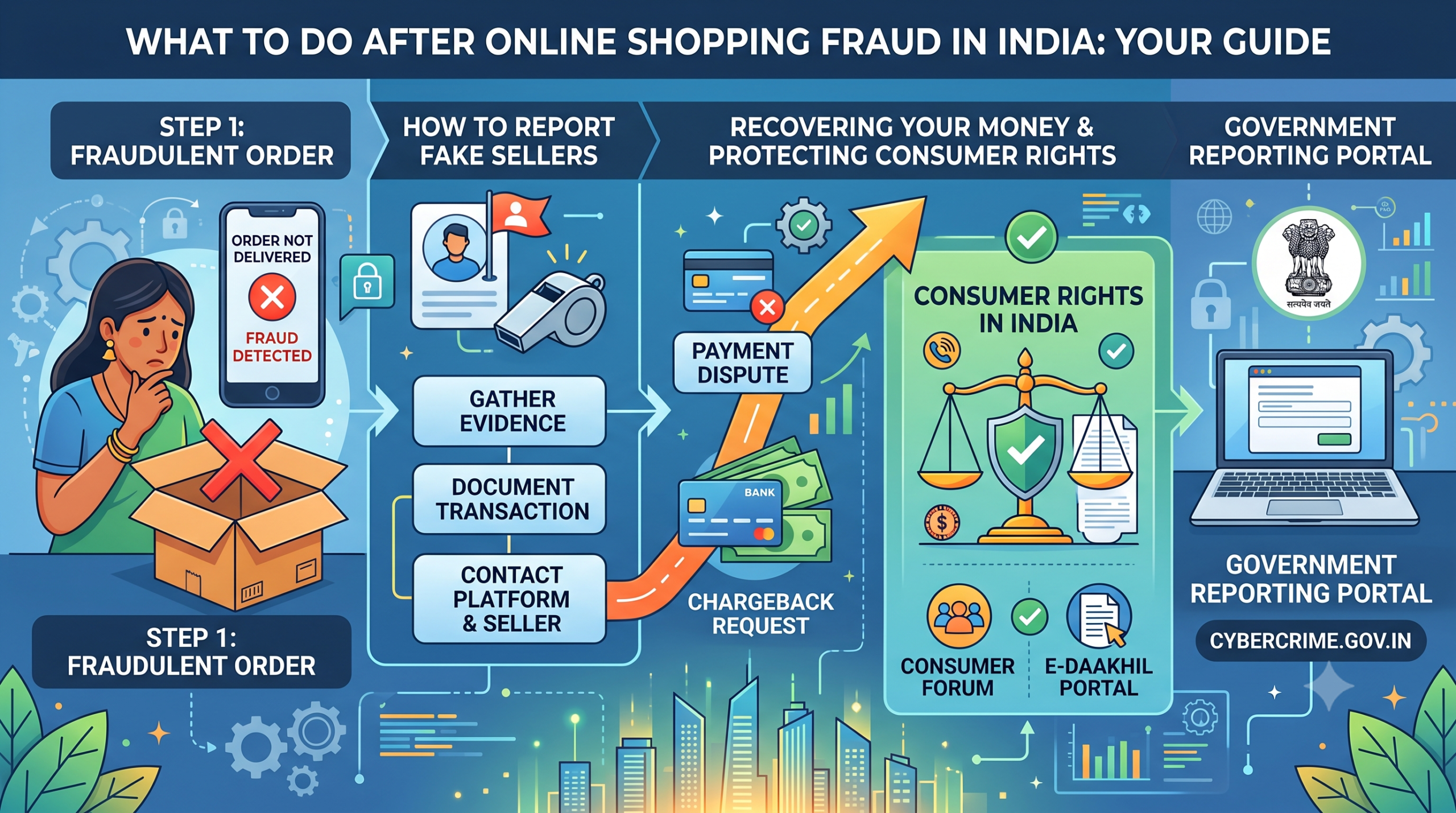
Take these steps in order.
Step 1: Check the Order Status
Start by reviewing the information available on the shopping platform.
Check:
- Order confirmation.
- Estimated delivery date.
- Courier tracking details.
- Delivery updates.
Sometimes delays occur due to logistics issues rather than fraud.
Step 2: Contact the Seller
If the expected delivery date has passed, contact the seller using the official communication channels available on the platform.
Keep copies of:
- Emails.
- Chat conversations.
- Complaint numbers.
- Screenshots.
Written communication creates an important record if the dispute escalates.
Step 3: Contact the Shopping Platform
If the seller is unresponsive, raise the issue directly with the marketplace or platform.
Most major e-commerce platforms have dedicated dispute resolution and buyer protection mechanisms.
Provide:
- Order ID.
- Payment receipt.
- Screenshots.
- Communication history.
The more organised your records, the easier it becomes to investigate the complaint.
Step 4: Contact Your Bank or Payment Provider
If you paid using:
- Credit card.
- Debit card.
- UPI.
- Internet banking.
- Digital wallet.
Contact your bank immediately if you suspect fraud.
In certain situations, your bank may advise you on dispute resolution or available payment protection mechanisms.
If your issue involves a fraudulent transaction rather than a delivery dispute, you should also report it promptly.
Related Article: How to File a Cyber Crime Complaint Online in India
Step 5: Preserve All Evidence
Documentation is one of your strongest tools.
Keep copies of:
- Order confirmation.
- Payment receipt.
- Invoice.
- Tracking information.
- Product listing.
- Screenshots.
- Emails.
- Chat conversations.
- Courier updates.
- Refund requests.
Deleting emails or messages can make resolving disputes more difficult later.
Can You Get a Refund?
In many situations, yes.
Whether you receive a refund depends on several factors, including:
- The shopping platform’s policies.
- The seller’s response.
- The payment method used.
- The facts of your case.
Many reputable marketplaces have buyer protection programmes designed to resolve genuine disputes.
The earlier you report the issue, the better.
What If You Ordered Through Instagram, Facebook, or WhatsApp?
Social commerce has grown rapidly in recent years, but it has also become a common source of fraud.
Before making payment:
- Verify the business.
- Check customer reviews.
- Look for a GST number or business registration where applicable.
- Avoid making advance payments to unknown sellers.
- Be cautious if the seller refuses cash on delivery without any established reputation.
Many online shopping fraud cases begin with advertisements on social media.
Can You File a Consumer Complaint?
Yes.
If the seller fails to resolve the issue, consumers may explore the remedies available under consumer protection laws.
Consumer disputes commonly involve:
- Non-delivery.
- Defective products.
- Refund delays.
- Misleading advertisements.
- Poor service.
Preserve all supporting documents before initiating any complaint.
Can Online Shopping Fraud Also Be a Cybercrime?
Sometimes, yes.
If fake websites, phishing links, impersonation, payment fraud, or identity theft are involved, the matter may also require reporting through the appropriate cybercrime mechanisms.
Examples include:
- Fake shopping websites.
- Fraudulent payment links.
- Fake customer support executives.
- QR code scams.
- UPI payment fraud.
Understanding whether your case is a consumer dispute or cyber fraud helps determine the appropriate course of action.
How to Avoid Online Shopping Fraud
Simple precautions can significantly reduce your risk.
Before placing an order:
- Buy from trusted platforms.
- Verify seller ratings.
- Read customer reviews.
- Avoid unrealistic discounts.
- Use secure payment methods.
- Keep transaction records.
- Never share OTPs or banking credentials.
- Be cautious of links received through SMS or WhatsApp.
Prevention is often easier than resolving a dispute after payment has already been made.
Common Mistakes Consumers Make
Many disputes become more complicated because buyers:
- Delete payment receipts.
- Ignore suspicious delivery updates.
- Continue communicating only over phone calls.
- Wait several weeks before reporting the issue.
- Trust fake customer care numbers found through online searches.
Maintaining proper records and acting early can make a significant difference.
Official Resources
If you need reliable information or wish to explore available remedies, you can refer to:
- National Consumer Helpline
https://consumerhelpline.gov.in - National Consumer Disputes Redressal Commission
https://ncdrc.nic.in - National Cyber Crime Reporting Portal
https://cybercrime.gov.in - India Code
https://www.indiacode.nic.in
Related Articles
You may also find these guides helpful:
- How to File a Cyber Crime Complaint Online in India
- The First 30 Minutes After a Cyber Fraud Can Decide Whether Your Money Is Recoverable
- 25 Legal Questions Every Indian Asks (Answered by Lawyers)
- Can WhatsApp Chats Be Used as Evidence in Indian Courts?
- Common Legal Problems in India and How to Avoid Them
Frequently Asked Questions
What should I do if my online order never arrives?
Start by checking the tracking information, contacting the seller, and raising the issue with the shopping platform. Preserve all payment and communication records.
Can I get my money back if I was scammed while shopping online?
Recovery depends on the facts of the case, the payment method used, the platform’s policies, and how quickly the issue is reported.
Is every delayed delivery considered online shopping fraud?
No. Delivery delays may occur for several reasons. Fraud generally involves deception, fake sellers, non-delivery despite payment, or intentional misrepresentation.
Should I report fake shopping websites?
Yes. Reporting fraudulent websites can help protect other consumers and assist the relevant authorities.
Is online shopping fraud covered under consumer protection laws?
Depending on the facts, consumers may have remedies under consumer protection laws as well as cybercrime reporting mechanisms if fraudulent online activity is involved.
Conclusion
Online shopping has made purchasing products easier than ever, but it also requires consumers to stay alert.
If your order doesn’t arrive or you suspect online shopping fraud in India, don’t ignore the issue or assume it will resolve on its own. Preserve your records, communicate through official channels, and act promptly.
Most importantly, remember that good documentation, timely reporting, and informed decision-making often play a crucial role in resolving consumer disputes. Whether the issue involves a delayed order, a fake seller, or payment fraud, taking the right steps early can improve your chances of a successful outcome.