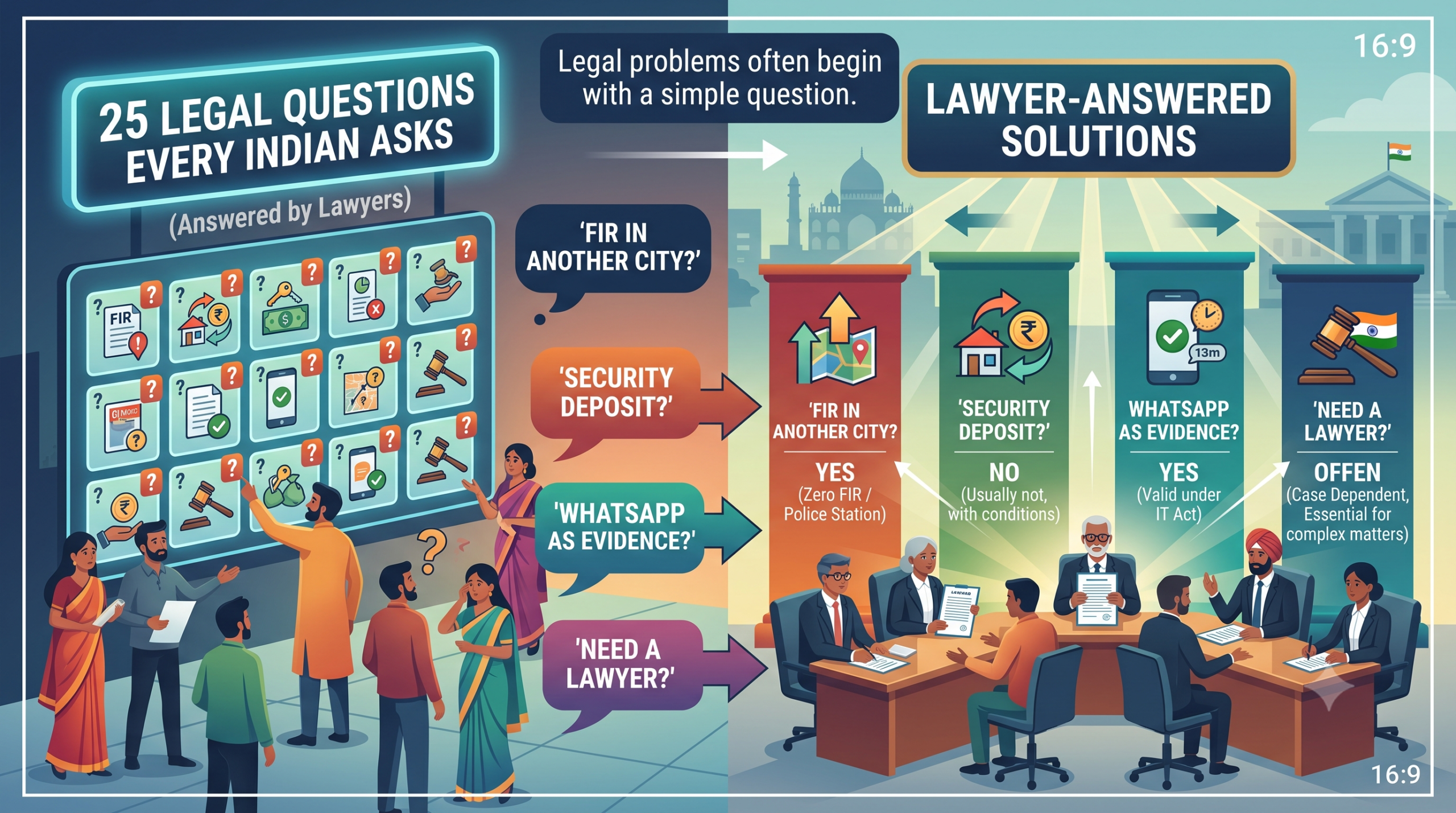
Legal problems often begin with a simple question.
Can I file an FIR in another city?
Can my landlord keep my security deposit?
Is a WhatsApp message valid evidence?
Do I really need a lawyer?
These are questions millions of Indians search online every year. Unfortunately, the answers are often scattered across different websites or written in complex legal language.
This guide brings together some of the most common legal questions people ask in India and answers them in a simple, practical way. While every case depends on its specific facts, understanding these basics can help you make informed decisions and know when to seek further guidance. These legal questions in India cover topics ranging from cyber fraud and property disputes to employment and consumer rights.
Why These Legal Questions in India Matter
Every day, thousands of people search online for answers to legal problems involving cyber fraud, property disputes, consumer complaints, employment issues, family matters, and police procedures. While general information is widely available, it is often difficult to know which advice applies to your situation. These legal questions in India are based on the issues people most frequently face and are intended to provide a clear starting point before taking further action.
1. Can I File an FIR in Any Police Station?
Yes. In many situations, you can file a Zero FIR, which allows a police station to register your complaint even if the incident occurred outside its jurisdiction. The complaint can later be transferred to the appropriate police station.
2. Can WhatsApp Chats Be Used as Evidence?
Yes, WhatsApp chats may be used as evidence, depending on the circumstances and compliance with the applicable rules of evidence. Preserving original chats, exports, and related records is important if they may be relevant to a dispute.
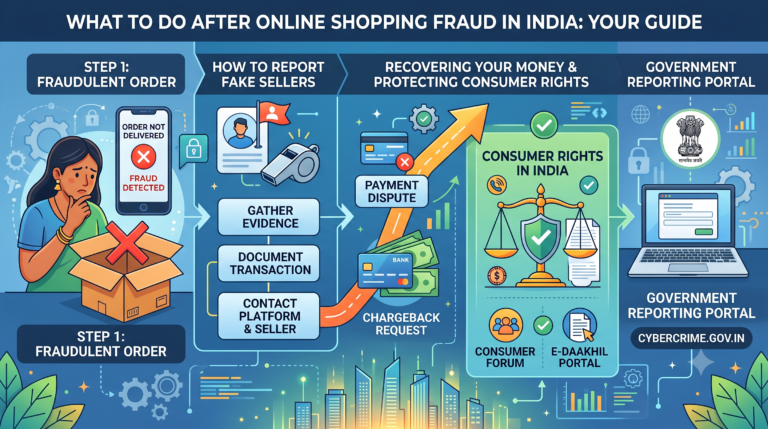
3. What Should I Do After a Cyber Fraud?
Act immediately.
- Inform your bank.
- Call the cyber fraud helpline 1930.
- Report the incident through the National Cyber Crime Reporting Portal.
- Preserve all transaction records and communication.
Related: How to File a Cyber Crime Complaint Online in India
4. Can I Recover Money Lost in an Online Scam?
Recovery may be possible, particularly if the fraud is reported promptly. The outcome depends on factors such as the nature of the fraud, the speed of reporting, and the actions taken by the bank and investigating authorities.
5. Can a Landlord Keep My Security Deposit?
A landlord cannot generally make arbitrary deductions without justification. The rental agreement and the facts of the case will determine whether deductions are valid.
Related: Rental Deposit Disputes: What Tenants Should Know
6. Can I Record a Phone Call Without Telling the Other Person?
Whether a recording can be used depends on the circumstances and the purpose for which it is made. If you intend to rely on a recording, it is advisable to understand the applicable legal considerations.
7. What Happens If Someone Refuses to Return Borrowed Money?
Keep records of the loan, payment proof, messages, and any written acknowledgements. The appropriate remedy will depend on the facts, the amount involved, and the available evidence.
8. Do I Need a Lawyer for Every Legal Issue?
Not always. Some issues can be resolved through proper documentation, communication, or by following the prescribed legal process. More complex matters may require professional legal assistance.
9. Can Police Check My Mobile Phone?
The circumstances under which law enforcement may examine a device depend on the facts of the investigation and the applicable legal framework.
10. Can I Send a Legal Notice Without a Lawyer?
In many situations, a legal notice can be prepared without engaging a lawyer. However, it should be accurate, complete, and appropriate for the circumstances.
11. What Should I Do If My Employer Doesn’t Pay My Salary?
Keep employment records, salary slips, appointment letters, and communication with your employer. The available remedies depend on your employment terms and applicable labour laws.
12. Can I Cancel a Property Booking?
The answer depends on the booking agreement, applicable laws, and whether the project is covered under RERA.
13. What Is RERA?
The Real Estate (Regulation and Development) Act, 2016 was introduced to improve transparency and accountability in the real estate sector and to protect homebuyers.
14. Can I File a Consumer Complaint Online?
Yes. Many consumer disputes can be initiated through the appropriate online government platforms.
15. What Should I Do If I Receive a Legal Notice?
Do not ignore it. Read it carefully, preserve all relevant documents, and understand the issues before responding.
16. Is a Verbal Agreement Legally Valid?
Some verbal agreements may be legally enforceable, but proving their existence and terms can be difficult without supporting evidence.
17. Can I Change My Name Legally?
Yes. India has a recognised legal process for changing a person’s name, subject to the applicable requirements.
18. What Should I Do If My Builder Delays Possession?
Review your builder-buyer agreement, maintain records of payments and communication, and consider whether remedies under RERA may be available.
19. Can I Report Cyber Fraud Even If I Lost a Small Amount?
Yes. Every cyber fraud should be reported, regardless of the amount involved. Early reporting also helps authorities identify patterns and investigate repeat offenders.
20. Can Police Refuse to Register My Complaint?
The law provides remedies if a complaint is not registered. The appropriate course of action depends on the circumstances of the case.
21. Can I Get Divorced by Mutual Consent?
Yes. Mutual consent divorce is available when both spouses agree to end the marriage and satisfy the legal requirements.
22. Can I Trademark My Business Name?
In many cases, yes. Registering a trademark can help protect your brand identity and reduce the risk of future disputes.
23. What Documents Should I Always Keep Safe?
Maintain copies of important documents such as:
- Identity documents.
- Property records.
- Insurance policies.
- Loan agreements.
- Important contracts.
- Wills and nomination records.
24. When Should I Seek Legal Guidance?
Consider seeking guidance when the issue involves significant financial loss, personal rights, property, employment, family disputes, or legal deadlines.
Early guidance often helps prevent avoidable mistakes.
25. How Can I Prepare Before Speaking to a Lawyer?
Before seeking legal guidance, organise:
- A timeline of events.
- Relevant documents.
- Payment records.
- Photographs or screenshots.
- Emails and messages.
- Any notices or official communication.
Having this information ready makes it easier to understand the situation and discuss possible next steps.
Official Resources
For reliable legal information and public services, you can also refer to:
- National Legal Services Authority (NALSA): https://nalsa.gov.in
- National Cyber Crime Reporting Portal: https://cybercrime.gov.in
- National Consumer Helpline: https://consumerhelpline.gov.in
- India Code: https://www.indiacode.nic.in
Frequently Asked Legal Questions in India
Is online legal information enough to resolve every legal issue?
Not always. General information can help you understand your rights, but the appropriate course of action depends on the facts of your situation.
When should I seek professional legal guidance?
If your issue involves financial loss, legal deadlines, property, family matters, or potential criminal liability, it is advisable to seek guidance early.
Are online legal platforms useful?
They can be a convenient starting point for understanding your options, especially when they provide structured, situation-specific guidance.
Legal Questions in India: Final Takeaways
Understanding these common legal questions in India can help you make better decisions and avoid costly mistakes. Legal questions are a part of everyday life, whether you’re dealing with cyber fraud, a property dispute, a consumer complaint, or a family matter.
Knowing the basics can help you respond with confidence, avoid common mistakes, and take informed decisions. When the situation is complex or time-sensitive, seeking timely guidance can make the process clearer and more manageable.