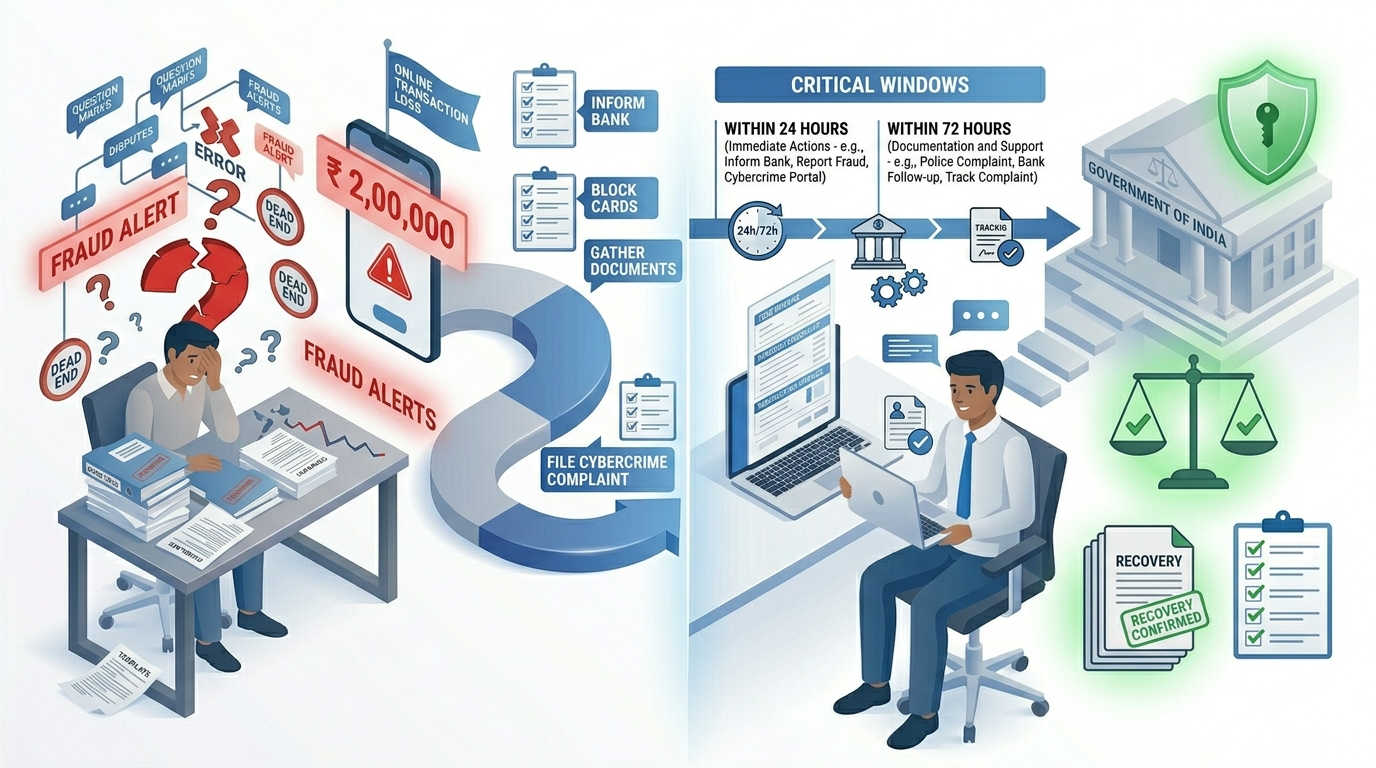
When someone becomes the victim of cyber fraud, the biggest mistake is often waiting too long before taking action.
Many people spend the first few hours trying to understand what happened, searching for information online, or wondering whether the money can still be recovered. Unfortunately, every hour matters.
This case study explains how a structured response helped initiate recovery efforts after an individual lost ₹39.5 lakh in an online financial fraud.
While every case is different and recovery can never be guaranteed, this example shows why the first 24 to 72 hours are often the most important.
Table of Contents
The Situation
An individual contacted us after discovering that ₹39.5 lakh had been transferred through unauthorised online transactions.
The incident involved:
- High value financial loss.
- Digital fund transfers.
- Immediate risk of the money being moved through multiple accounts.
Because of the amount involved, every minute became important.
The Biggest Challenge
Most victims don’t know what to do immediately after discovering a fraud.
Common questions include:
- Should I contact the bank first?
- Should I file a police complaint?
- Should I call the cyber fraud helpline?
- What documents will I need?
- What information should be included in the complaint?
Without clear answers, valuable time is often lost.
Why the First 72 Hours Matter
The first few hours after a cyber fraud are critical because authorities and banks may still be able to trace or freeze the movement of funds.
Early reporting can help with:
- Tracing transactions.
- Coordinating with banks.
- Initiating account freeze requests.
- Supporting investigation by cyber crime authorities.
The longer the delay, the greater the possibility that the money will be transferred through multiple accounts, making recovery more difficult.
For a detailed guide on immediate reporting, read What to Do in the First 30 Minutes After a Cyber Fraud.
Internal Link: /cyber-fraud-first-30-minutes/
The Response
The immediate focus was not on lengthy legal discussions.
The priority was organising accurate information and ensuring that the right authorities received it without delay.
Step 1. Establishing a Clear Timeline
The first step was to prepare a chronological record of events.
This included:
- Time of the fraudulent transactions.
- Bank account details.
- Transaction references.
- Communication received before and after the incident.
A clear timeline reduced confusion and ensured that important information was not overlooked.
Step 2. Organising the Evidence
Supporting documents were collected and arranged, including:
- Bank statements.
- Transaction IDs.
- SMS alerts.
- Screenshots.
- Email communication.
Proper documentation made it easier for the relevant authorities to understand the incident.
Step 3. Coordinating Immediate Reporting
Once the information was organised, the required reporting process was initiated without unnecessary delay.
This included coordination with the relevant banking channels and cyber fraud reporting mechanisms.
If you’re unsure how to report cyber fraud, read our guide on How to File a Cyber Crime Complaint Online in India.
Internal Link: /how-to-file-a-cybercrime-complaint-online-in-india/
The Outcome
Action was initiated within the first 24 hours.
Coordination with the relevant institutions continued during the following 72 hours, enabling recovery efforts while the transactions were still traceable.
A significant portion of the funds was successfully traced, frozen, and recovered.
Although every cyber fraud case is different, this matter demonstrated the importance of acting quickly and providing complete, organised information from the beginning.
What This Case Teaches
Several lessons stand out from this case.
1. Don’t Wait
Many victims spend valuable time trying to understand the fraud before reporting it.
Immediate action is usually the better approach.
2. Documentation Matters
Well organised evidence helps banks and authorities understand the situation more quickly.
3. Accuracy Is Important
Incorrect account numbers, missing transaction IDs, or incomplete timelines can delay action.
4. Every Hour Counts
Early reporting can significantly improve the chances of tracing the movement of funds.
Common Mistakes After Cyber Fraud
People often reduce their chances of recovery by:
- Waiting until the next day to report the fraud.
- Deleting messages or transaction alerts.
- Filing incomplete complaints.
- Contacting unofficial customer care numbers found online.
- Assuming the bank will automatically recover the money.
How SimplerToday Can Help
If you’ve been affected by cyber fraud, acting quickly is essential.
At SimplerToday, we help individuals organise the facts of their case, prepare structured documentation, and understand the immediate steps that may be required.
The process begins with:
1. Understanding Your Situation
Share the details of what happened through a phone call or WhatsApp.
2. Reviewing the Available Information
A qualified legal professional reviews the facts, identifies any missing information, and helps organise the available evidence.
3. Receiving Your First Consultation Report
Depending on the circumstances, the report may include:
- Suggested next steps.
- Missing information.
- Applicable legal provisions.
- Jurisdiction.
- Potential risks and practical considerations.
The objective is to help you act promptly and make informed decisions during a time sensitive situation.
Official Resources
For immediate assistance, you can refer to:
- National Cyber Crime Reporting Portal
https://cybercrime.gov.in - National Cyber Fraud Helpline – 1930
- Reserve Bank of India Consumer Awareness
https://www.rbi.org.in
Frequently Asked Questions
1. Can money be recovered after cyber fraud?
Recovery is possible in some cases, particularly when the fraud is reported quickly and the relevant authorities are able to trace or freeze the movement of funds. However, recovery cannot be guaranteed and depends on the facts of each case.
2. How quickly should I report cyber fraud?
You should contact your bank and report the incident immediately. Early reporting gives banks and authorities a better opportunity to respond.
3. What documents should I keep?
Preserve bank statements, transaction IDs, SMS alerts, emails, screenshots, and any communication related to the fraudulent transaction.
4. Should I report the fraud to both my bank and the cyber crime authorities?
Yes. Prompt reporting to the bank as well as through the appropriate cyber crime reporting channels is generally recommended.
5. What is the biggest mistake victims make?
The most common mistake is delaying action while trying to understand what happened instead of reporting the incident immediately.
Conclusion
Cyber fraud cases often become a race against time. While no two cases are the same, this ₹39.5 lakh fraud case demonstrates how early reporting, organised documentation, and timely coordination can make a significant difference.
If you discover an unauthorised transaction, don’t wait. Preserve the evidence, report the incident immediately, and begin the recovery process as quickly as possible.