Table of Contents
Freelancing offers flexibility, independence, and the opportunity to work with clients from anywhere in the world. But it also comes with risks that many professionals don’t think about until something goes wrong.
A client refuses to pay after the work is delivered.
The project scope keeps changing without additional payment.
Your designs, content, or code are reused without permission.
These situations are more common than you might expect, and most of them can be avoided with the right contracts for freelancers.
Whether you’re a graphic designer, software developer, digital marketer, writer, photographer, consultant, or video editor, having a proper contract is one of the simplest ways to protect your work and maintain professional relationships.
In this guide, we’ll look at the most important contracts every freelancer should have and why they matter.
Why Are Contracts Important for Freelancers?
Many freelancers begin projects with nothing more than a WhatsApp conversation or an email confirmation. While this may seem convenient, it can create confusion if expectations change later.
Well drafted contracts for freelancers help both parties understand:
- The scope of work.
- Payment terms.
- Project timelines.
- Ownership of the final work.
- Responsibilities if disputes arise.
A written agreement protects both the freelancer and the client by reducing misunderstandings.
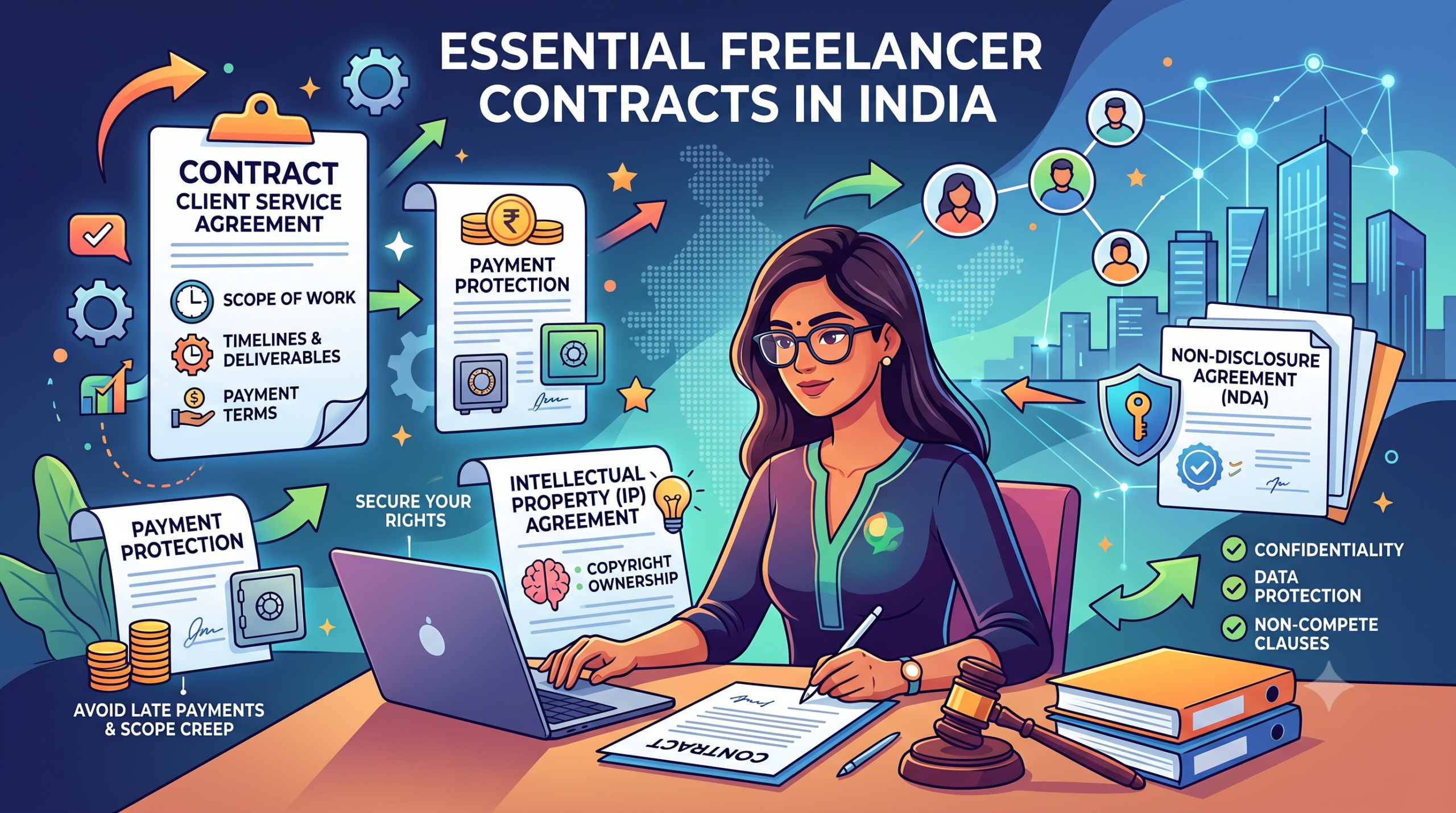
1. Freelance Service Agreement
The Freelance Service Agreement is the foundation of most contracts for freelancers.
It should clearly mention:
- Details of both parties.
- Scope of services.
- Project deliverables.
- Timelines.
- Payment schedule.
- Revision policy.
- Grounds for termination.
Without a service agreement, disagreements over what was promised can become difficult to resolve.
2. Non Disclosure Agreement (NDA)
Freelancers often work with confidential business information.
An NDA helps protect:
- Business strategies.
- Customer information.
- Product ideas.
- Financial data.
- Marketing plans.
Clients are also more likely to trust freelancers who are willing to sign confidentiality agreements.
3. Intellectual Property Agreement
One of the most overlooked contracts for freelancers deals with intellectual property.
Before starting a project, decide:
- Who owns the final work?
- When does ownership transfer?
- Can the freelancer display the work in a portfolio?
- Can the client modify the work later?
Clear ownership clauses help avoid future disputes over copyright and usage rights.
4. Payment Agreement
Late payments are among the biggest challenges freelancers face.
Your agreement should clearly state:
- Project fees.
- Advance payment requirements.
- Payment milestones.
- Final payment deadline.
- Late payment charges, if applicable.
- Accepted payment methods.
Having these terms in writing reduces the chances of payment disputes.
5. Statement of Work (SOW)
For larger projects, a Statement of Work adds clarity to the service agreement.
It typically includes:
- Project objectives.
- Detailed deliverables.
- Milestones.
- Timelines.
- Client responsibilities.
- Success criteria.
This document becomes especially useful when projects continue over several months.
6. Independent Contractor Agreement
A freelancer is generally not an employee.
An Independent Contractor Agreement clarifies:
- The freelancer is providing independent services.
- Employment benefits do not apply.
- Tax responsibilities remain separate.
- The freelancer controls how the work is performed.
This distinction can help avoid confusion later.
7. Website and Privacy Terms (For Freelancers with Websites)
If you collect enquiries through your website, you should also have:
- Privacy Policy.
- Terms of Use.
- Cookie Policy, where applicable.
These documents help explain how visitor information is collected and used.
Common Mistakes Freelancers Make
Many disputes arise because important details were never discussed.
Some common mistakes include:
- Starting work without a written agreement.
- Accepting verbal promises.
- Not collecting an advance payment.
- Ignoring ownership of intellectual property.
- Allowing unlimited revisions.
- Not defining project deadlines.
- Using the same contract for every client without reviewing it.
What Should Every Freelance Contract Include?
Regardless of your profession, good contracts for freelancers should generally include:
- Names and contact details.
- Scope of work.
- Deliverables.
- Timelines.
- Payment terms.
- Revision limits.
- Confidentiality obligations.
- Intellectual property ownership.
- Termination clauses.
- Dispute resolution mechanism.
The exact terms may vary depending on the nature of the project.
Can Emails or WhatsApp Messages Be Considered Agreements?
In some situations, emails, messages, purchase orders, and invoices may become relevant evidence if a dispute arises.
However, relying only on informal communication often creates uncertainty about important issues such as payment terms, ownership of work, and project scope.
A written contract provides much greater clarity than scattered conversations.
When Should You Get a Contract Reviewed?
Consider getting your agreement reviewed if:
- The project involves a high value.
- You’re working with an overseas client.
- Intellectual property is important.
- The contract contains unfamiliar legal clauses.
- Long term business relationships are involved.
Reviewing a contract before signing is usually easier than resolving a dispute later.
Helpful Resources
For general information on contracts and business compliance, you can explore:
- Ministry of Corporate Affairs
https://www.mca.gov.in - India Code
https://www.indiacode.nic.in
Related Articles
You may also like:
- Employment Rights in India: What Every Employee Should Know
- Can WhatsApp Messages Be Used as Evidence in Court?
- 25 Legal Questions Every Indian Should Know the Answer To
Frequently Asked Questions
Do freelancers really need contracts?
Yes. A written agreement helps clarify expectations, payment terms, ownership of work, and responsibilities.
Can I use the same contract for every client?
Not always. Different projects may require different terms depending on the services being provided.
Is an email enough to protect me legally?
Emails may help establish communication, but they often don’t cover all the important terms of a professional engagement.
Who owns the work created by a freelancer?
Ownership depends on the agreement between the parties. It’s best to address this clearly before work begins.
Should freelancers ask for advance payment?
Many freelancers request an advance before starting work to reduce financial risk and demonstrate client commitment.
Conclusion
Successful freelancers don’t just deliver quality work. They also protect their business with clear agreements.
The right contracts for freelancers help define expectations, reduce misunderstandings, and provide a framework for resolving issues if they arise.
Whether you’re taking on your first client or managing multiple projects every month, investing time in proper contracts can save you significant time, money, and stress in the future.